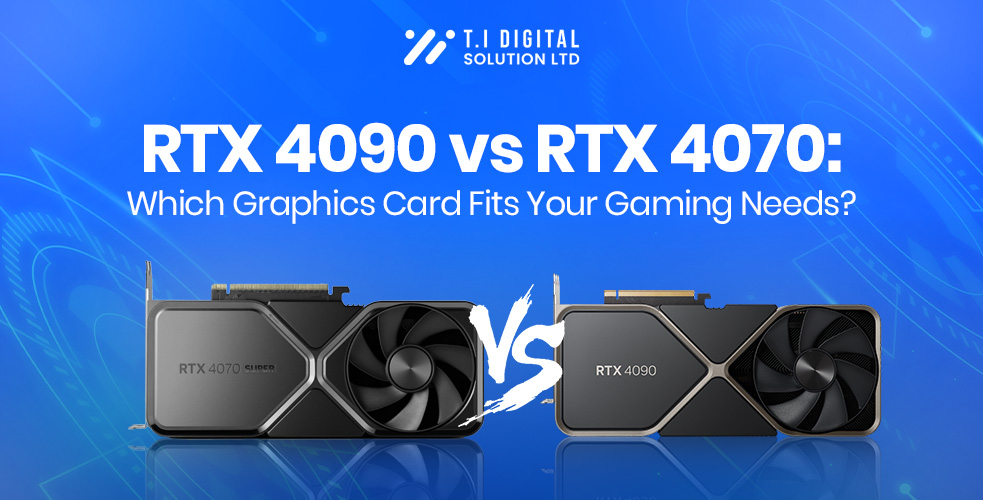
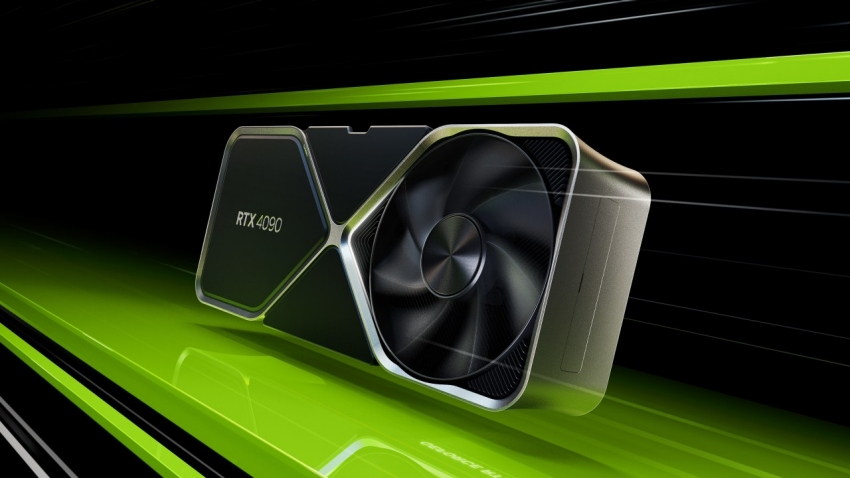
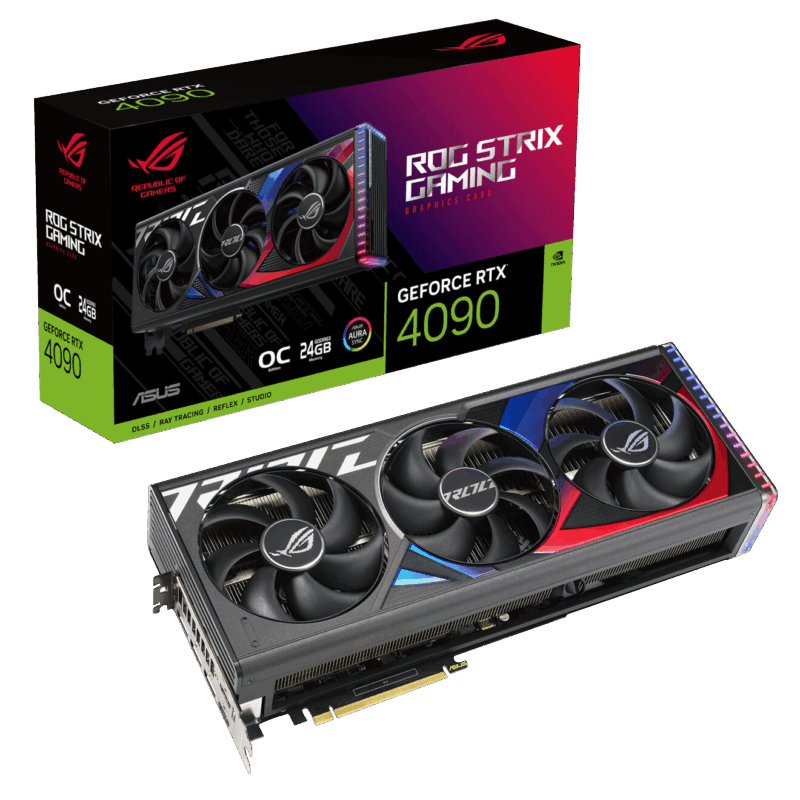
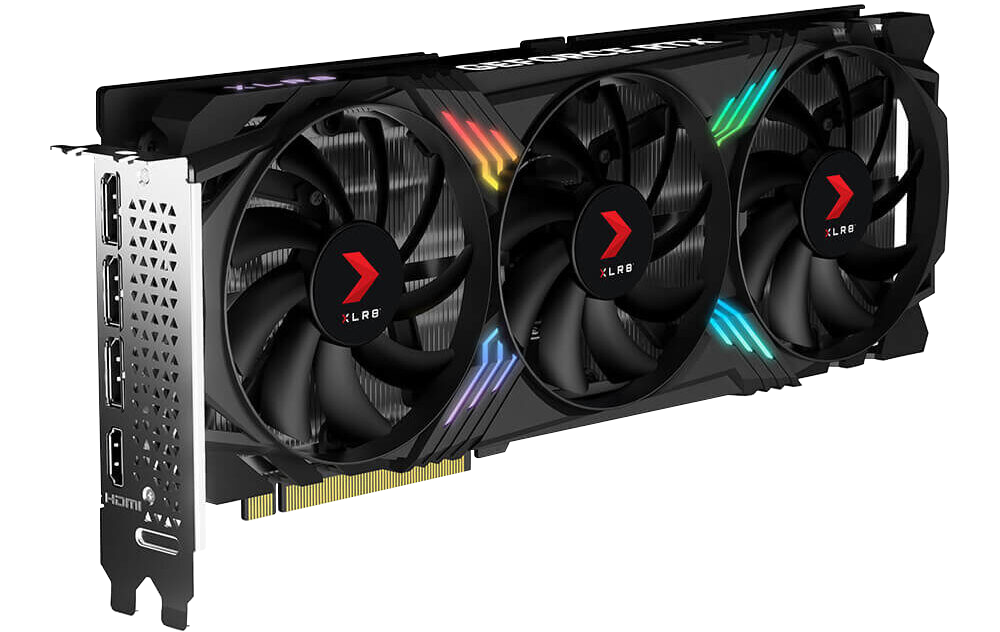
The RTX 4090 stands out as a performance beast, while the RTX 4070 offers solid specs for gamers looking for great performance on a budget. Whether you’re upgrading from an older card or building a new rig, these cards cater to distinct needs.
1.Performance Comparison:
The RTX 4090 dominates in 4K gaming, delivering buttery-smooth frame rates even in the most demanding titles. It’s perfect for gamers who want to max out every setting, including ray tracing, without compromising on FPS. Popular games like Cyberpunk 2077 and Red Dead Redemption 2 run seamlessly at ultra settings.
The RTX 4070 shines in 1440p gaming and even performs well at 4K with slight compromises. Titles such as Call of Duty: Warzone and Fortnite can hit high frame rates at 1440p, making this card an excellent choice for competitive gamers.
2.Ray Tracing and DLSS:
Both GPUs support NVIDIA’s latest DLSS 3 and third-gen ray tracing cores, but the RTX 4090’s additional cores make a noticeable difference in rendering complex lighting effects. For gamers seeking hyper-realistic visuals, the RTX 4090 delivers unmatched ray tracing performance.
3.Creative Workloads:
For content creators working on 3D rendering, video editing in 8K, or running AI-powered workflows, the RTX 4090’s massive memory and CUDA cores provide a significant edge. It’s a powerhouse for professionals using tools like Blender, Adobe Premiere Pro, and DaVinci Resolve.
While capable of handling creative workloads, the RTX 4070 is better suited for hobbyists or those working on less intensive tasks such as photo editing or 1080p video editing.
Power Comsuption and Cooling:
The RTX 4090’s 450W TDP demands a high-end power supply and efficient cooling. It’s powerful but runs hot, so proper airflow is essential. For best results, pairing it with a PSU of at least 850W and a spacious case with optimized cooling fans is recommended.
The RTX 4070’s 200W TDP is much more manageable, making it a better choice for users with mid-range setups. Its lower power draw means quieter and cooler operation, making it ideal for compact builds.
Additionally, noise levels are worth considering. While the RTX 4090 requires beefy cooling solutions that may produce noticeable fan noise, the RTX 4070’s efficiency allows for near-silent operation in most scenarios.
Price-to-Performance Ratio
Budget is often a deciding factor. The RTX 4090’s premium price reflects its top-tier performance, making it ideal for enthusiasts who want the best of the best. On the other hand, the RTX 4070 delivers excellent value for gamers who prioritize performance without breaking the bank.
Aimed at users who demand peak performance for both gaming and professional tasks. It’s an investment, but one that pays off for power users.
Offers a more budget-friendly option while still delivering impressive gaming performance. Perfect for gamers upgrading from older mid-tier cards.
Use Cases
Let’s dive into who these cards are best suited for:
- RTX 4090: Ideal for extreme gamers, professionals in 3D rendering or AI research, and anyone who needs top-tier performance for future-proofing their PC.
- RTX 4070: Perfect for mainstream gamers, streamers, and those seeking excellent performance without overspending. It’s also a great pick for casual creators.
Conclusion
Choosing between the RTX 4090 and RTX 4070 comes down to your needs and budget. If you’re chasing ultimate performance for 4K gaming or professional workloads, the RTX 4090 is unbeatable. However, for most gamers and even casual creators, the RTX 4070 offers plenty of power at a much more reasonable price point.
Ultimately, your choice should reflect how you plan to use the card. Both GPUs are fantastic in their own right, and either one would be a great addition to your system. Whether you’re building a dream PC or upgrading your current setup, NVIDIA’s latest GPUs continue to push the boundaries of performance and efficiency.
Read complete article about RTX 5070 vs RTX 5090 – Full Specs, Performance & Buying Guide