

Indoor Access Points
If you’re aiming for consistent, high-performance WiFi inside your home or workplace, indoor access points offer the reliability you need. Designed for enclosed spaces, these devices help eliminate signal weak spots and maintain strong coverage where it’s needed most—offices, classrooms, apartments, retail shops, or large homes.

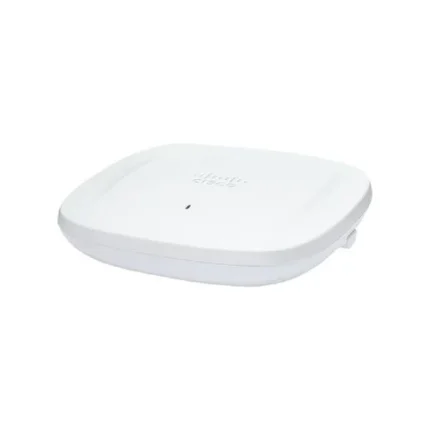

Incl. VAT: £1,633.84


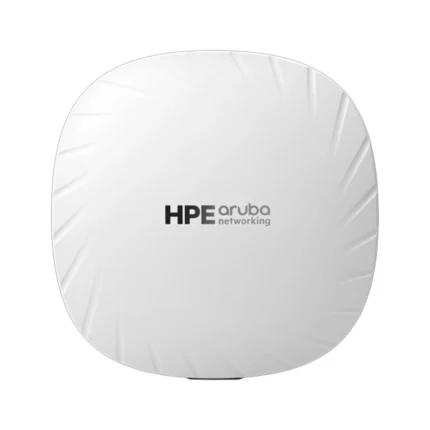
Key Features:
| Brand | HPE |
| Product Type: | Wireless Access Point |
| Wi-Fi Standard | IEEE 802.11ax |
| Wireless Data Rate | 4.8 Gbit/s |
| Frequency | 2.4 GHz or 5 GHz |
| Ethernet Standard | 25 Gigabit Ethernet |
| USB Port | YES |
| PoE Power Distribution Port | YES |
| Height | 1.8 Inches |
| Width | 7.8 Inches |
| Depth | 7.8 Inches |
Incl. VAT: £497.94

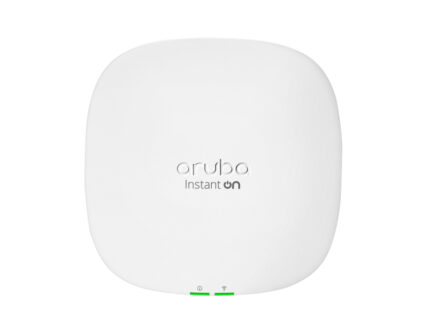
Available on Backorder

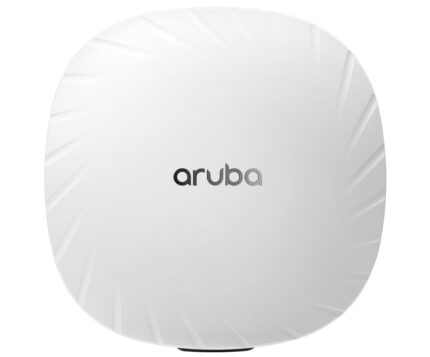
Key Features:
| Brand | HPE |
| Product type | Wireless Access Points |
| Ethernet LAN data rates | 100,1000,2500,5000 Mbit/s |
| Maximum data transfer rate | 5950 Mbit/s |
| Spread spectrum method | DSSS, OFDM |
| Networking standards | IEEE 802.11ax |
| Maximum data transfer rate | 5950 Mbit/s |
| MIMO | Yes |
| Spread spectrum method | DSSS, OFDM |
| Cable lock slot | Yes |
| Security algorithms | WMM, WPA, WPA2 |
| Power consumption (max) | 38.2 W |
| Power over Ethernet (PoE) | Yes |
| Placement | Ceiling |
| Product colour | White |
| Certification | None |
| Cable lock slot | Yes |
| Cable lock slot type | Kensington |
| Certification | None |
| Width | 260 mm |
| Depth | 260 mm |
| Weight | 1.57 kg |
| Height | 58 mm |
Incl. VAT: £358.62


Key Features:
| Brand | Ubiquiti |
| Type | Wireless Access Point |
| Wifi Technology | Wi-Fi 6 |
| Ethernet LAN data rates | 10,100,1000 Mbit/s |
| Networking standards | IEEE 802.11a, IEEE 802.11ac, |
| Power plug type | Desk/Wall |
| Power over Ethernet (PoE) | Yes |
| Placement | Ceiling |
| Product colour | White |
| 6 GHz | No |
| 2.4 GHz | Yes |
| 5 GHz | Yes |
| Transmitting power | 23 dBmW |
| Number of users | 300 user(s) |
| VLAN support | Yes |
| Quality of Service (QoS) support | Yes |
| Networking standards | IEEE 802.11a, IEEE 802.11ac, IEEE 802.11ax, IEEE 802.11b, IEEE 802.11g, IEEE 802.11n, IEEE 802.1Q |
| Maximum indoor range | 139.35 m |
| Maximum data transfer rate | 2402 Mbit/s |
| MIMO | Yes |
| Maximum data transfer rate (2.4 GHz) | 573.5 Mbit/s |
| Maximum data transfer rate (5 GHz) | 2402 Mbit/s |
| Security algorithms | WPA-Enterprise, WPA-PSK, WPA2-Enterprise, WPA3-Enterprise |
| Internal RJ-45 ports quantity | 1 |
| USB 2.0 ports quantity | 0 |
| Ethernet LAN (RJ-45) ports | 1 |
| Power consumption (max) | 9 W |
| Power over Ethernet (PoE) | Yes |
| DC voltage range | 44 - 57 V |
| Housing material | Aluminium, Polycarbonate (PC) |
| Placement | Ceiling |
| Product colour | White |
| Reset button | Yes |
| LED indicators | Yes |
| Certification | IC |
| Antenna type | Internal |
| Antenna gain level (max) | 5.4 dBi |
| Transmitting power | 23 dBmW |
| Reset button | Yes |
| Compliance certificates | CE, Federal Communications Commission (FCC) |
| Certification | IC |
| Compliance certificates | CE, Federal Communications Commission (FCC) |
| LED indicators | Yes |
| Width | 160 mm |
| Depth | 160 mm |
| Weight | 338 g |
| Height | 33 mm |
| Mounting kit | Yes |
| Mounting kit | Yes |
| Quantity per pack | 1 pc(s) |
| Operating relative humidity (H-H) | 5 - 95% |
| Operating temperature (T-T) | -30 - 60 °C |
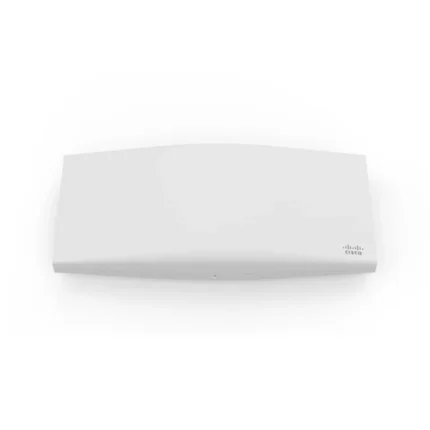
Key Features:
| Brand | Cisco |
| Type | Wireless Access Point |
| Wifi Technology | Wi-Fi 6 |
| Ethernet LAN data rates | 10,100,1000 Mbit/s |
| Networking standards | IEEE 802.11a, IEEE 802.11ac |
| Power plug type | Type C |
| Power over Ethernet (PoE) | Yes |
| Placement | Ceiling, Wall |
| Product colour | White |
| 2.4 GHz | Yes |
| 5 GHz | Yes |
| VLAN support | Yes |
| Networking standards | IEEE 802.11a, IEEE 802.11ac, IEEE 802.11ax, IEEE 802.11b, IEEE 802.11g, IEEE 802.11n |
| Ethernet LAN data rates | 10,100,1000,2500 Mbit/s |
| MIMO type | Multi User MIMO |
| MIMO | Yes |
| Networking standards | IEEE 802.11a, IEEE 802.11ac, IEEE 802.11ax, IEEE 802.11b, IEEE 802.11g, IEEE 802.11n |
| VLAN support | Yes |
| 2.4 GHz | Yes |
| 5 GHz | Yes |
| VLAN support | Yes |
| Networking standards | IEEE 802.11a, IEEE 802.11ac, IEEE 802.11ax, IEEE 802.11b, IEEE 802.11g, IEEE 802.11n |
| Ethernet LAN data rates | 10,100,1000,2500 Mbit/s |
| MIMO type | Multi User MIMO |
| MIMO | Yes |
| Security algorithms | EAP-TLS, EAP-TTLS, WEP, WPA, WPA2-Enterprise, WPA2-PSK, WPA3 |
| Ethernet LAN (RJ-45) ports | 1 |
| DC-in jack | Yes |
| Power over Ethernet (PoE) | Yes |
| Placement | Ceiling, Wall |
| Product colour | White |
| Antenna type | Internal |
| Harmonized System (HS) code | 85176990 |
| Width | 306 mm |
| Depth | 128.4 mm |
| Weight | 739 g |
| Height | 44.3 mm |
| Operating relative humidity (H-H) | 5 - 95% |
| Operating temperature (T-T) | 0 - 40 °C |
Why Choose Indoor Access Points?
Indoor access points are purpose-built to handle multiple users, devices, and interference from walls or other electronic devices. They provide better range and signal management compared to traditional routers, especially in busy environments.
Whether you’re setting up a smart home, expanding office coverage, or looking for the best indoor access points for home use, there are models that match your performance and budget needs. Brands like Aruba offer enterprise-grade reliability, making an Aruba indoor access point a smart choice for both commercial and home setups.
Building a Reliable Indoor Network
When setting up indoor access points, the goal is usually reliable coverage across key areas like living rooms, conference spaces, or small office setups. These access points often form the foundation of a wider network, and they work best when the layout of your space is considered from the start.
For homes with thick walls or buildings with multiple levels, you might want to look at extending your network later with devices that support next-gen standards like WiFi 6 or WiFi 7. In offices, combining indoor access points with wired units in areas where performance really matters—like meeting rooms or shared workstations—can provide more stability.
The key is to think in layers: an indoor access point for everyday coverage, maybe a few mesh-enabled devices if you need to push that signal further, and possibly a range extender tucked into a far corner where the signal drops.
FAQs – Indoor Access Points
Access points create a more stable and scalable network, especially in environments with multiple users or devices. Extenders simply boost signal but often reduce speed.
Yes. Many users install indoor access points for home use to achieve stable WiFi across multiple rooms or floors, especially in larger properties.
Absolutely. Most models are designed for flexible mounting—on ceilings, walls, or even in concealed locations—without compromising signal strength.
Yes. Indoor access points are not weather-resistant and are optimized for internal coverage, while outdoor versions are built to handle environmental conditions.
Many modern indoor access points now support WiFi 6, and newer models are being released with WiFi 7 capabilities for even greater speed and efficiency.