

24 Port Switches
If you’re building or expanding a business network, a 24-port switch is the ideal choice for handling multiple devices efficiently. With the ability to connect up to 24 devices—from computers and printers to IP cameras and VoIP phones—it delivers the scalability and performance required for modern networks.

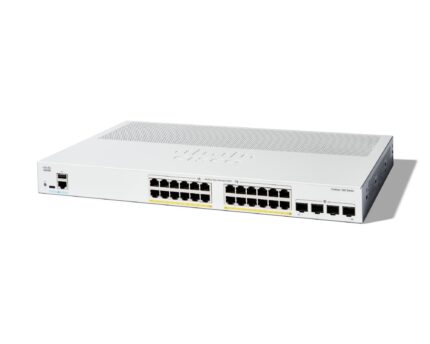

Key Features:
| Brand | Cisco |
| Type | Network Switch - Managed |
| Ports | 24 |
| Switch layer | L2 |
| Power consumption | 27.5 W |
| Ports type | Gigabit Ethernet (10/100/1000) |
| Power over Ethernet (PoE) | Yes |
| Management protocols | VigorACS, VigorConnect, Vigor |
| Routing protocols | CDP, EIGRP, OSPF, RIP, VRRP |
| Head-of-line (HOL) blocking | Yes |
| VLAN support | Yes |
| Spanning tree protocol | Yes |
| Rate limiting | Yes |
| Port mirroring | Yes |
| Link aggregation | Yes |
| Broadcast storm control | Yes |
| QinQ implementation | Selective QinQ |
| Policy-based routing | Yes |
| Virtual LAN features | Private VLAN, Voice VLAN |
| VLAN support | Yes |
| Virtual LAN features | Private VLAN, Voice VLAN |
| IPv4 & IPv6 features | ICMPv6, IPv6 SNMP, IPv6 SSH, IPv6 TFTP, IPv6 Telnet |
| Packet buffer memory | 1.5 MB |
| Plug and Play | Yes |
| Processor frequency | 1.4 MHz |
| Memory type | DDR4-SDRAM |
| Mean time between failures (MTBF) | 698220 h |
| Internal memory | 1000 MB |
| Flash memory | 512 MB |
| Built-in processor | Yes |
| Product colour | Grey |
| Processor frequency | 1.4 MHz |
| Mean time between failures (MTBF) | 698220 h |
| Rack mounting | Yes |
| Built-in processor | Yes |
| SFP module slots quantity | 4 |
| Basic switching RJ-45 Ethernet ports quantity | 24 |
| Basic switching RJ-45 Ethernet ports type | Gigabit Ethernet (10/100/1000) |
| Console port | RJ-45/USB Type-C |
| Jumbo frames | 9000 |
| Number of static routes | 990 |
| Packet buffer memory | 1.5 MB |
| MAC address table | 16000 entries |
| Switching capacity | 56 Gbit/s |
| Number of queues | 8 |
| Jumbo frames support | Yes |
| Static route | Yes |
| Authentication | MAC-based authentication, Web-based authentication |
| Access Control List (ACL) rules | 1024 |
| SSH/SSL support | Yes |
| Security algorithms | HTTPS, SNMP, SNMPv2, SNMPv3, SSH, SSH-2 |
| IGMP snooping | Yes |
| Access Control List (ACL) | Yes |
| Queue scheduling algorithms | Weighted Round Robin (WRR) |
| DoS attack prevention | Yes |
| Authentication type | RADIUS, TACACS+ |
| IGMP proxy | Yes |
| DHCP features | DHCP auto-config, DHCP client, DHCP relay, DHCP server, DHCP snooping |
| Multicast support | Yes |
| GARP VLAN Registration Protocol (GVRP) | Yes |
| IPv4 & IPv6 features | ICMPv6, IPv6 SNMP, IPv6 SSH, IPv6 TFTP, IPv6 Telnet |
| Certification | UL (UL 62368), CSA (CSA 22.2), CE mark, FCC Part 15 (CFR 47) Class A |
| Packet buffer memory | 1.5 MB |
| Memory type | DDR4-SDRAM |
| Internal memory | 1000 MB |
| Flash memory | 512 MB |
| Reset button | Yes |
| Country of origin | China |
| Product colour | Grey |
| Certification | UL (UL 62368), CSA (CSA 22.2), CE mark, FCC Part 15 (CFR 47) Class A |
| Rack mounting | Yes |
| Packaging content | Switch, power cable, USB Type C cable and mounting hardware |
| GARP VLAN Registration Protocol (GVRP) | Yes |
| Power plug type | Type C |
| AC input voltage | 100 - 220 V |
| AC input frequency | 50/60 Hz |
| Power consumption (typical) | 27.5 W |
| Power source | AC |
| Total Power over Ethernet (PoE) budget | 195 W |
| Power over Ethernet (PoE) ports quantity | 24 |
| Power over Ethernet (PoE) | Yes |
| Storage temperature (T-T) | -25 - 70 °C |
| Storage relative humidity (H-H) | 10 - 90% |
| Operating temperature (T-T) | -5 - 50 °C |
| Operating relative humidity (H-H) | 10 - 90% |
| Heat dissipation | 795.2 BTU/h |
| Width | 298.7 mm |
| Depth | 444.5 mm |
| Height | 43.9 mm |
| Weight | 3.53 kg |
| Package width | 430 mm |
| Package depth | 575.1 mm |
| Package height | 105.9 mm |
| Package weight | 5.77 kg |

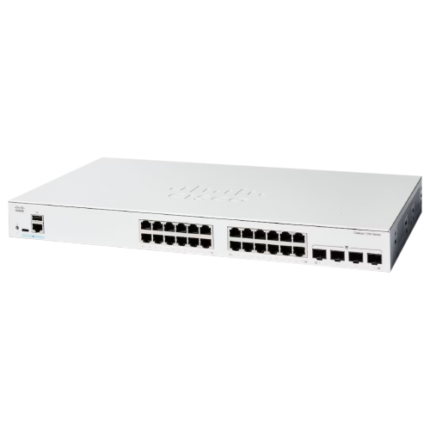
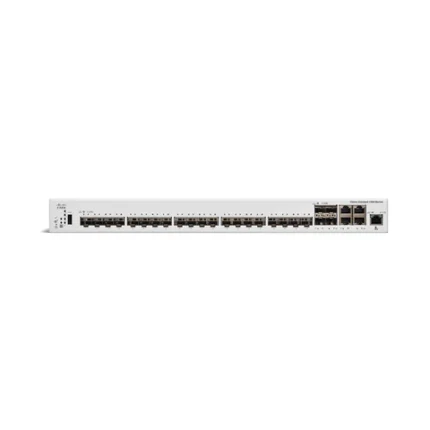
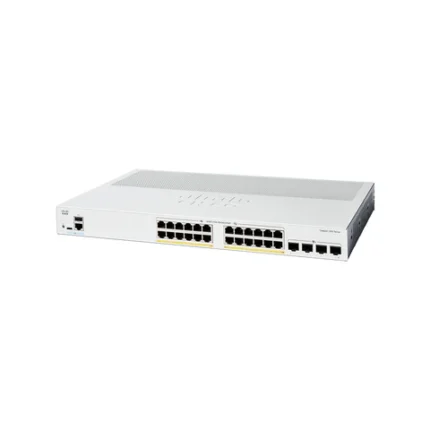
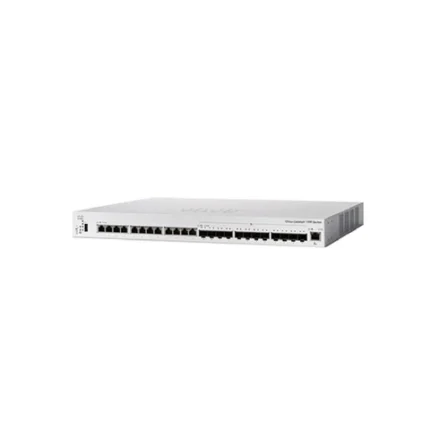
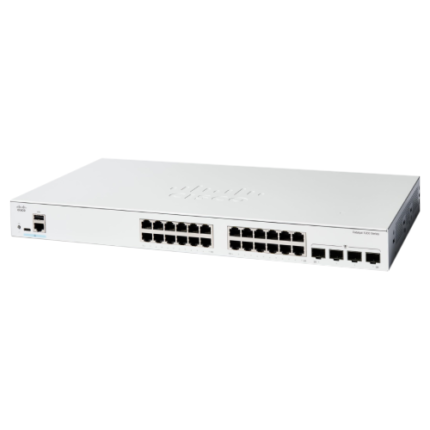
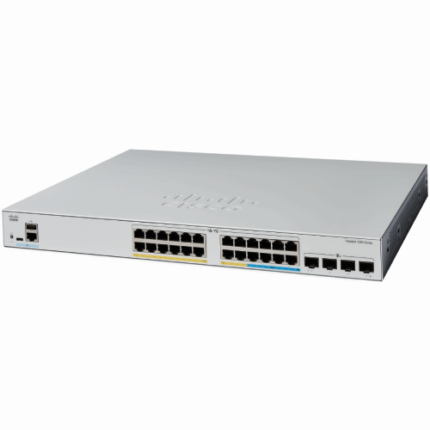
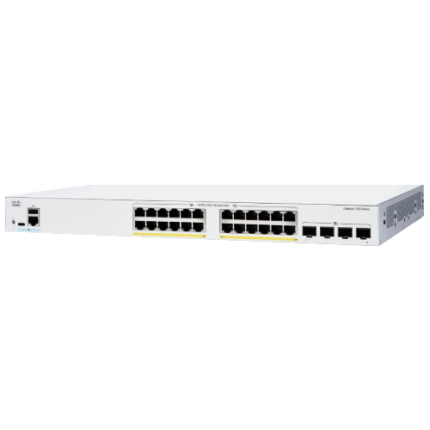
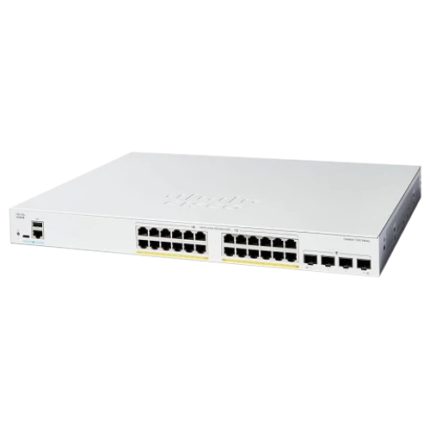
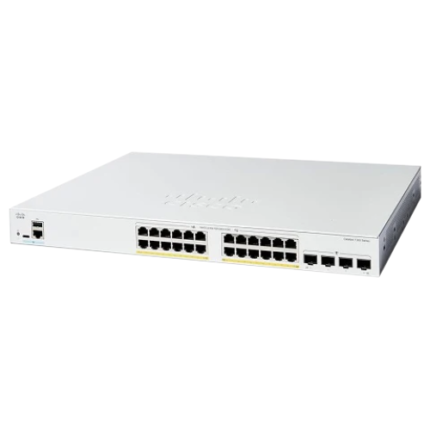
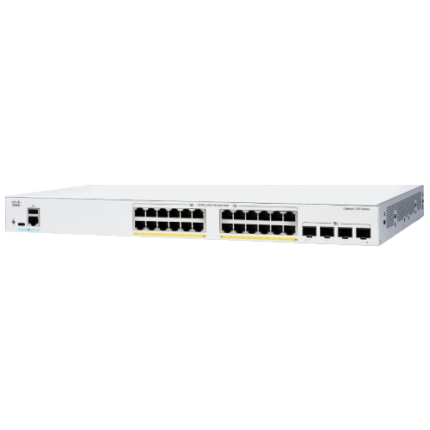
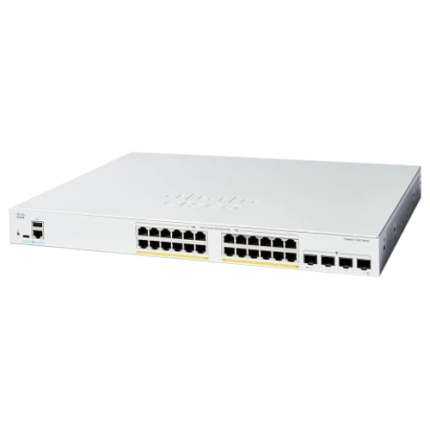
From small to medium-sized offices to high-traffic home networks, a 24 port network switch offers the perfect balance between capacity, speed, and affordability.
Types of 24 Port Switches Available
Whether you're setting up a straightforward system or a more advanced network, our range covers various types of 24 port switches:
-
24 Port PoE Switch: Power up IP phones, access points, and cameras using Power over Ethernet. These switches eliminate the need for separate power supplies, simplifying cable management.
-
24-Port Gigabit Switch: Experience fast data transfer speeds with gigabit ethernet performance. Essential for large file sharing, streaming, and real-time applications.
-
24 Port Managed Switch: Offers control, security, and monitoring capabilities. Ideal for IT professionals managing segmented traffic, VLANs, or prioritizing bandwidth.
-
24 Port Unmanaged Switch: A plug-and-play solution for hassle-free installations. Perfect for businesses or individuals that need basic connectivity without advanced configurations.
-
Non PoE Switch Options: For environments where power delivery isn’t needed, non-PoE switches provide a cost-effective and energy-efficient solution.
Looking to power up a gaming network? 24 port switches for gaming are reliable for LAN parties and competitive gaming setups needing low latency and consistent throughput.
Why Choose a 24-Port Ethernet Switch?
Compared to 8, 10, or 16-port switches, a 24 port ethernet switch provides more room to grow without overcommitting. It also serves as a solid backbone for connecting multiple departments or rooms. The form factor fits well in standard rackmount environments, making it suitable for data centers and structured cabling systems.
Plus, with options like managed switch support and PoE, it’s easier than ever to maintain control and power over your entire network.
FAQs – 24 Port Switches
1: What is a 24 port switch used for?
A: It connects up to 24 wired devices, making it ideal for offices, schools, or server rooms needing high-capacity and reliable network distribution.
2: Should I choose a PoE or non-PoE 24 port switch?
A: Choose a 24 port PoE switch if you need to power devices like IP cameras or wireless access points. Go with non-PoE for standard wired networking without power delivery.
3: What is the difference between managed and unmanaged switches?
A: A managed switch allows advanced configurations like traffic prioritization and VLANs. An unmanaged switch offers simple plug-and-play setup.
4: Is a 24 port switch suitable for gaming?
A: Yes, especially if you're managing multiple gaming devices. A 24 port gigabit switch ensures fast and consistent data transfer—crucial for online and LAN gaming.
5: Can I upgrade from a 24 port to a 48 port switch later?
A: Absolutely. Many 24-port switches support uplink ports or stacking, making expansion seamless when you're ready to scale to 48 port or beyond.